When you think of design hotspots, you imagine London, Milan, Copenhagen — not a small town tucked between mountains and water in County Kerry.
Honestly, until a few weeks ago, we hadn’t even heard of Kenmare.
And then we went.
And now we’re still talking about it.
What we found wasn’t a polished “design event” in the usual sense.
It was real. Honest.

Kenmare — A Place That Doesn’t Announce Itself
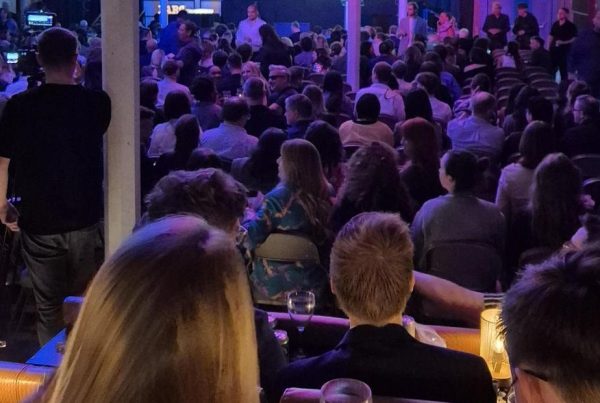
The first talks weren’t in a glossy exhibition hall, but in a modest arts centre that felt more like a community space than a design venue. Chairs pulled together, people spilling into corners, artists greeting locals by name.
And the town itself? Kenmare is one of those places that doesn’t need to declare anything. You simply arrive and feel something — colour, craft, texture, quiet pride.
A town with no formal centre yet full of coherence. Shopfronts with personal care. Streets that don’t follow city logic but instead form a triangular weave of life. Picturesque without trying, creative without performing.
It feels like a secret you’re glad you discovered late — because discovering it makes it yours.
Kenmare changed something for us.
So here’s what happened, and what stayed with us.
Public Space & Ownership — Lessons From the Talks
The weekend opened with photographer Rich Gilligan and others exploring public space — not drawings or diagrams, but lived-in space.
The line that stayed with us:
A space feels alive when people have ownership of it.
Not ownership on a map — but the kind that comes from sweeping your doorstep, placing a plant pot outside, sitting on the same bench every day.
Rich spoke about Dublin squares that once thrived because people claimed them. And then he spoke about what happened when redevelopment erased that informal belonging.
Beautiful drawings, dead reality.
Kenmare, by contrast, still holds its genius loci — local stone, human scale, lived-in streets.
You can feel it under your feet.
Honesty, Identity, and the Danger of Nostalgia
Bryan O’Sullivan, Paul Galvin, and Darrell Kavanagh didn’t talk in curated soundbites or design jargon. Their honesty was refreshing.
Bryan avoids algorithm-driven inspiration — he goes to history, books, archives, real places.
Paul spoke almost like a poet — finding design worlds in a single word, crest, or story.
Darrell reminded everyone that identity isn’t a logo, but behaviour, culture, and clarity.
They all warned about nostalgia.
Powerful, yes — but dangerous.
It can honour heritage… or trap you in imitation.

Context, Site and the Quiet Nature of Creativity
Amanda Bone said something that has been echoing in our minds since:
“If you’re stuck, go back to the site — the answer is there.”
She spoke about architecture as something slow and iterative — not magical, but grounded: context, people, history, small everyday details.
A reminder that creativity doesn’t need to feel dramatic.
It can feel real. Quiet. Human.
Panels mixed architects, interior designers, photographers, brand designers, fashion people — different disciplines, same truths:
People first.
Meaning over aesthetics.
Identity over styling.
The Future of Design — Longevity, Material Honesty, and Common Sense
The 5:30pm panel with Amanda Bone, Róisín Lafferty, Bryan O’Sullivan and Simon Ronan explored how design shapes not only buildings but how we live.
Róisín explored how interiors affect mood and behaviour long after the photographs fade.
Bryan spoke about longevity — design that endures seasons, not trends.
Simon focused on the grounded, local, humble side of future-thinking.
Someone compared AI to eating too much chocolate, and the room laughed — because it’s true. Useful, but seductive and hollow in excess.
Imperfection kept coming back.
Brushstrokes. Rough walls. The marks of life.
The things that tell the truth about a place.

Landscape and Lighting — Rhythm, Memory and Quiet Design
The final panel connected landscape and community — a space where lighting and landscape overlap more than most people realise.
The message was simple:
Design should adapt to people and nature — not force people to adapt to design.
Landscape and lighting share rhythm: seasons, movement, shadow, texture, memory.
Quiet design lets people feel something.
Every session returned to the same principles:
People first.
Meaning matters.
Imperfection is beautiful.
Authenticity is a responsibility.
Creativity grows from the ordinary.
Design is not decoration — it is care, intention, and storytelling.
What Kenmare Taught Us
As lighting designers, we often say we “shape darkness to reveal form, emotion and memory.”
Kenmare didn’t shout this back at us — it whispered it.
The best lighting whispers.
The best towns honour their own stories.
The best design listens before it acts.
Kenmare surprised us.
Inspired us.
Reminded us why we love what we do.
If this is what Irish design looks like when rooted in honesty and community, we’re excited for what comes next.
Before we left Kenmare, we took a few photos — small moments that capture the spirit of the weekend better than any summary ever could.
They sit below, along with a link to one of our own reflections from earlier this year, and to Edit Design Studio, whom we were delighted to meet at the festival.


https://antumbralightingdesign.com/2025/10/30/lighting-design-inspiration/